Weather Alert in Colorado
Blowing Dust Warning issued February 17 at 12:52PM MST until February 17 at 5:00PM MST by NWS Goodland KS
AREAS AFFECTED: Yuma County; Kit Carson County; Cheyenne County; Cheyenne; Sherman; Thomas; Wallace; Logan; Gove; Greeley; Wichita
DESCRIPTION: * WHAT...For the Blowing Dust Warning, several plumes of dust are ongoing across the warned area. Brownout conditions are expected near these plumes extending several miles downstream of the source region. For the High Wind Warning, west winds 35 to 45 mph with gusts up to 65 mph. * WHERE...Portions of east central and northeast Colorado and northwest and west central Kansas. * WHEN...Until 5 PM MST /6 PM CST/ this afternoon. * IMPACTS...Severely limited visibilities are expected. Travel will be dangerous and possibly life-threatening. Poor air quality may cause issues for people with respiratory problems. High winds may move loose debris, damage property and cause power outages. Travel could be difficult, especially for high profile vehicles. Plumes of blowing dust will create pockets of low visibility. Visibilities will likely change rapidly over short distances, making travel hazardous in these areas. * ADDITIONAL DETAILS...Be especially cautious near open fields in areas where the wind is perpendicular to the road. These locations are especially vulnerable to significant dust plumes and should be approached with extreme caution. If possible, avoid travel until winds subside.
INSTRUCTION: Blowing dust can significantly lower air quality and it is encouraged that you take preventative measures such as staying indoors or wearing protective breathing masks if outside. High dust concentrations can cause respiratory problems, decrease lung activity, aggravate asthma, and lead to potential heart-related problems, especially with children, elderly or those with pre-existing respiratory conditions. Be ready for a sudden drop in visibility to near zero. If you encounter blowing dust or blowing sand on the roadway or see it approaching, pull off the road as far as possible and put your vehicle in park. Turn the lights all the way off and keep foot off the brake pedal. Remember, 'Pull Aside, Stay Alive'. Be prepared for a prolonged period of poor air quality due to blowing dust. Fasten loose objects or shelter objects in a safe location prior to the onset of winds. Winds this strong can make driving difficult, especially for high profile vehicles. Use extra caution.
Want more detail? Get the Complete 7 Day and Night Detailed Forecast!
Current U.S. National Radar--Current
The Current National Weather Radar is shown below with a UTC Time (subtract 5 hours from UTC to get Eastern Time).

National Weather Forecast--Current
The Current National Weather Forecast and National Weather Map are shown below.

National Weather Forecast for Tomorrow
Tomorrow National Weather Forecast and Tomorrow National Weather Map are show below.

North America Water Vapor (Moisture)
This map shows recent moisture content over North America. Bright and colored areas show high moisture (ie, clouds); brown indicates very little moisture present; black indicates no moisture.

Weather Topic: What is Drizzle?
Home - Education - Precipitation - Drizzle
 Next Topic: Evaporation
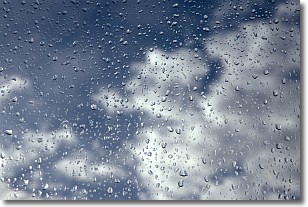
Drizzle is precipitation in the form of water droplets which are
smaller than raindrops.
Drizzle is characterized by fine, gently falling droplets and typically does not
impact human habitation in a negative way. The exception to this is freezing drizzle,
a condition where drizzle freezes immediately upon reaching earth's surface.
Freezing drizzle is still less dangerous than freezing rain, but can
potentially result in hazardous road conditions.
Next Topic: Evaporation
Weather Topic: What is Fog?
Home - Education - Cloud Types - Fog
 Next Topic: Fractus Clouds
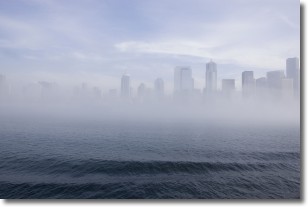
Fog is technically a type of stratus cloud, which lies along the
ground and obscures visibility.
It is usually created when humidity in the air condenses into tiny water droplets.
Because of this, some places are more prone to foggy weather, such as regions
close to a body of water.
Fog is similar to mist; both are the appearance of water droplets suspended in
the air, but fog is the term applied to the condition when visibility is less than 1 km.
Next Topic: Fractus Clouds
Current conditions powered by WeatherAPI.com